
Eastern US and Canada suffer major damage after Hurricane Debby
In early August, Hurricane Debby struck Florida with the remnants moving northwards through the eastern United States and into eastern Canada (Guardian, 2024a). At least eight people died in the United States and one person in Canada’s Quebec province due to heavy rains and flash flooding (Guardian, 2024b; Global News, 2024a). Based on preliminary estimates from Catastrophe Indices and Quantification Inc. (CatIQ), the storm caused nearly $2.5 billion CAD ($1.84 billion USD) in insured damage (Reinsurance News, 2024).
Event Overview
Birth of Hurricane Debby
The fourth named storm of the 2024 Atlantic hurricane season, Hurricane Debby began life as a tropical depression on 2 August, before strengthening to a tropical storm (3 August) and then a category 1 hurricane (4 August). It first made landfall on 5 August near Steinhatchee, Florida, moved offshore into the Atlantic Ocean on 6 August, before making a second landfall on 8 August near Bulls Bay, South Carolina (NESDIS, 2024).
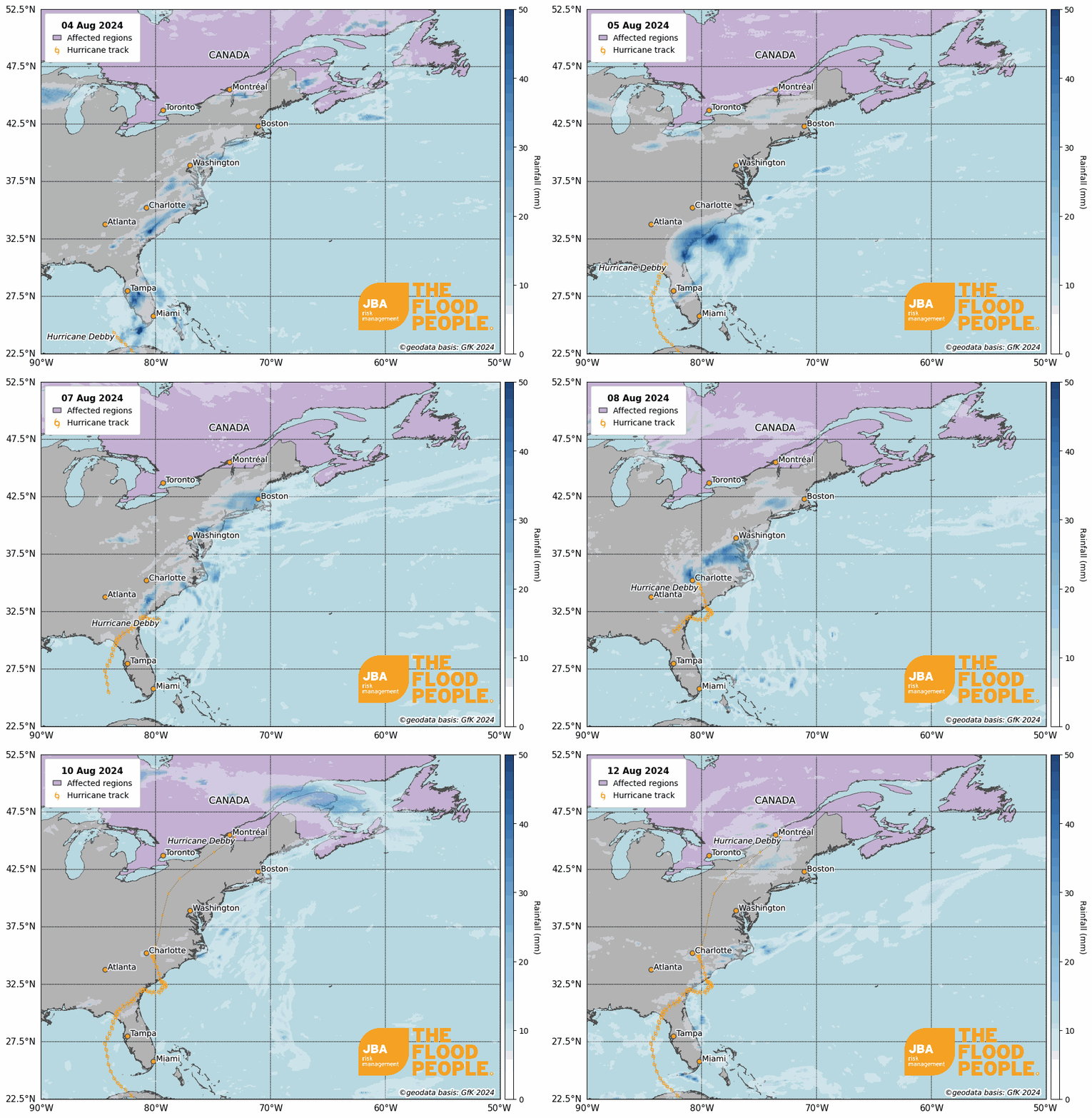
Hurricane Debby caused widespread flooding in the south-eastern United States with 35 million people placed under flood warnings from South Carolina to Vermont (Spectrum News 1, 2024). The storm uprooted trees and damaged properties along its path, with 300,000 customers suffering power outages in the south-eastern US (NESDIS, 2024).
Decaying of Debby into post-tropical cyclone storm
On 8 August, Debby was downgraded to a tropical depression and then a post-tropical cyclone (NESDIS, 2024). The remnants of storm Debby combined with a low-pressure system over Canada’s Great Lakes caused torrential rainfall in eastern Ontario and southern Quebec on 9 and 10 August (Global News, 2024b). Montreal, Quebec, received upwards of 150mm of rain in a single day, breaking the previous daily record set in November 1996 (CBC, 2024; Lethbridge News Now, 2024). Elsewhere in Quebec, up to 100mm of rain fell in Gatineau and more than 220mm in Lanoraie, whilst Ottawa, Ontario, received around 75mm (Global News 2024b).
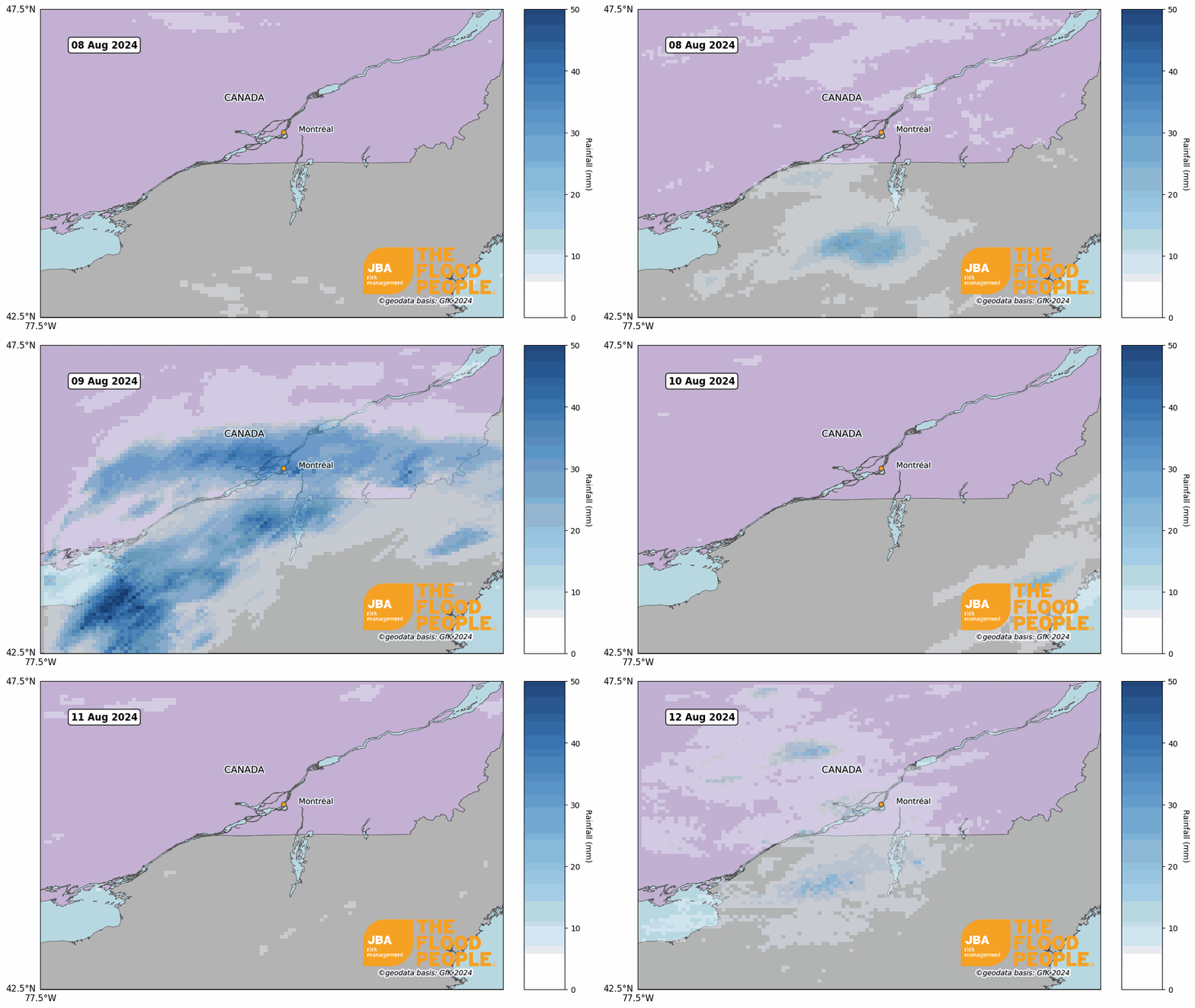
More than 50 municipalities across Quebec were impacted by the event, with eight declaring states of emergency (Global News, 2024a). At its peak, at least half a million homes were left without power (Global News, 2024a). Across the province, nearly 100 roads were submerged and several highways and tunnels were closed, leaving more than 1,500 homes isolated (Global News, 2024a; Global News 2024b). Hundreds of people were evacuated and Montreal’s fire department received more than 600 calls as the authorities used boats to carry out rescue operations. Several landslides were also reported in the Laurentian Mountains (CBC News, 2024).
Historical events
Debby is the second ex-hurricane to hit eastern Canada this year following Hurricane Beryl in mid-July (Canadian Underwriter, 2024). Beryl’s remnants left their mark in Canada after transforming into a post-tropical cyclone bringing about heavy rains, with rainfall totals of up to 50mm, flooding major highways and public transport routes in southern Ontario and Quebec (The Weather Network, 2024). Further impacts of Beryl, and other similar past events in the region can be seen in the table below.

This report is accompanied by a flood footprint covering flooding in Canada as a result of post-tropical cyclone Debby - detailing extents and depths of the flooding in areas affected. Download it via our Client Portal or request a copy by emailing eventresponse@jbarisk.com.


